

📍
Maryland Legends of Lost Treasure
Pirate Trunks of Treasure on the Bluff
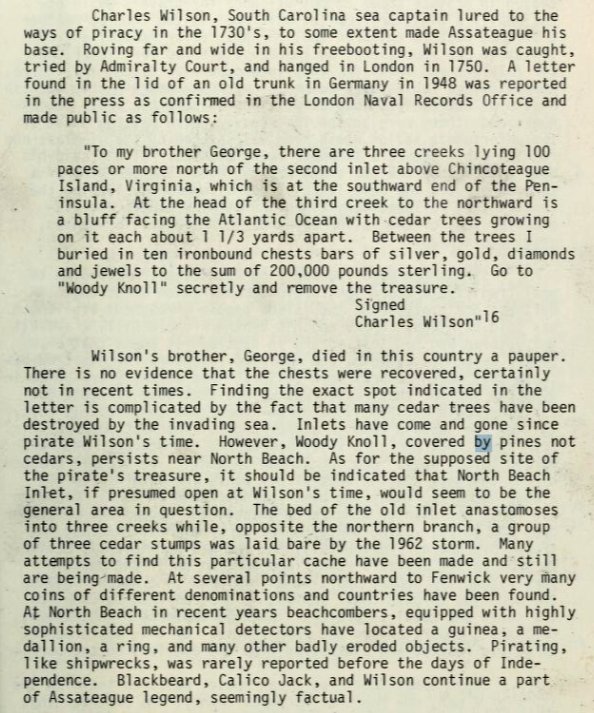
In the 1730s, South Carolina sea captain Charles Wilson turned pirate, preying on ships near Chincoteague and Assateague Islands off Virginia, before his 1750 execution in London he left his treasure’s location a mystery. A 1948 discovery in Germany—a verified letter from Wilson to his brother George—revealed precise instructions: from the second inlet above Chincoteague, head 100 paces north past three creeks to a bluff at the third creek’s head, marked by cedars 1⅓ yards apart facing the Atlantic, where 10 iron-bound chests holding £200,000 in silver bars, gold, diamonds, and jewels were buried at “Woody Knoll,” believed by many to be in Worcester County, Maryland. Despite searches since, shifting coastlines and hurricanes have erased the bluff over 270+ years. Storms are said to have destroyed the few cedars, and bluffs have collapsed, while some have found possible remnants – guineas, a ring, a medallion, and other badly eroded objects – in nearby sands. Explore More
The Lost Bloody Riches of Patty Cannon the Slave Trader & Serial Killer
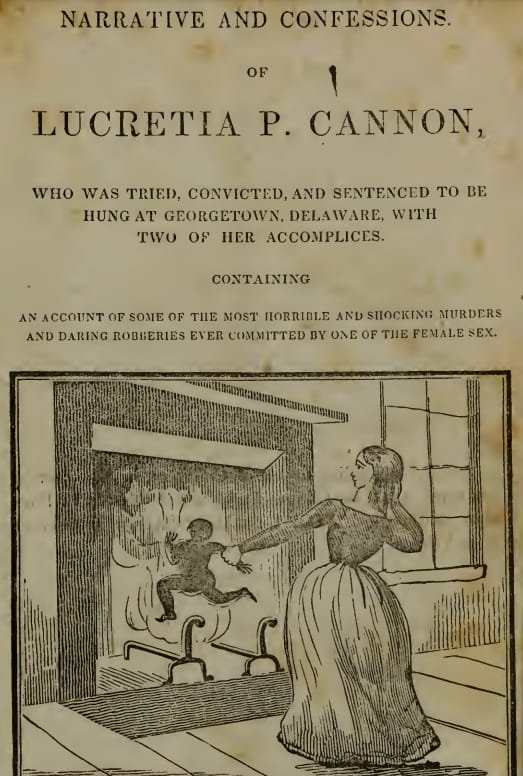
Lucretia “Patty” Cannon, a dark-eyed Irish-Canadian immigrant, was a tavern keeper and vicious kidnapper of free Black people who she sold into slavery, as well as escaped slaves, and a serial killer of travelers and slaves who crossed her. She ran the Cannon-Johnson Gang that acquired vast amounts of gold and silver gained from illegal slave trading, her Tavern enterprise, and looting her victims, which is said to be buried in the marshy grounds and fields surrounding the last home she lived in – “The Blue House” – near Reliance, Maryland (formerly Wilson’s Crossroads). After it was reported that there were multiple human remains on her property, and an investigation was conducted to confirm it, she was arrested and died of poisoning in prison. Her partners in crime fled or were executed. She was not known to spend much, so it is believed much of her ill-gained wealth still exists hidden around her property, and she wouldn’t have had time nor opportunity to move any of her wealth before being jailed. Explore More
Treasure of Cabin John
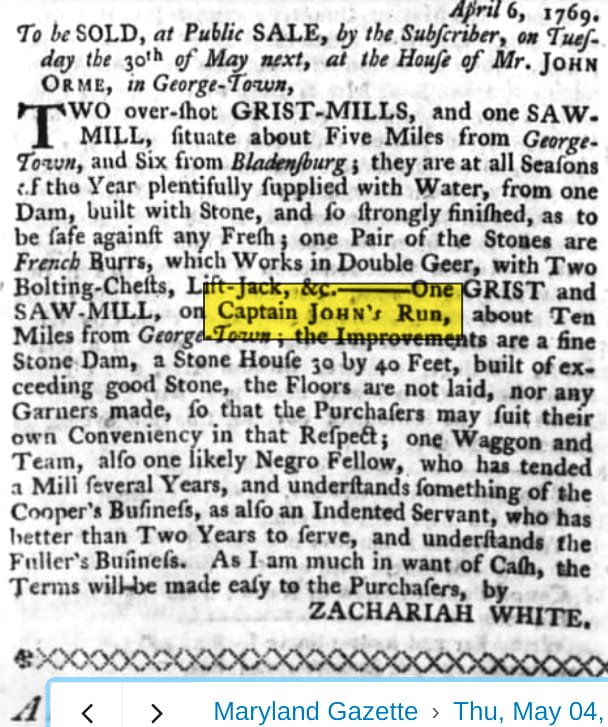
The town of Cabin John likely resulted from a combination of the first settler being “Captain John” who ran a tavern near the present intersection of River Road and Seen Locks Road in Cabin John, Maryland, and he was known to have a cabin along the west side of the creek originally called “Captain John’s Run” where he hunted and became a hermit in later years. The legend goes that he was a sea captain and pirate who fled with his treasures, evading pursuers by sailing his ship up the river to Little Falls where he then had a few of his men accompany him overland further to help transport the heavy load to a secluded spot where he killed the witnesses, buried the treasure, sailed the ship away, and then came back later by land or in a smaller vessel that wouldn’t be noticed and built his cabin near his treasure cache in the creek valley. Local documents and news lend credence to the story, such as a record involving the American Land Company reserving rights to 1/2 of any treasure found on the property it was selling. In the May 4, 1769 Maryland Gazette, property is advertised for sale at Captain John’s Run ten miles from Georgetown, while an earlier 1760 edition contains an ad for a found small black mare on a plantation of James Wallace along Captain John’s Run, and there are 1715 land records that refer to it as Captain John’s Run, so this John, his story, and any gold, silver, and other treasures he may have buried must pre-date 1715. Piracy was common from the 1600s through the 1730s in Maryland, and of the multiple pirate captains known to Maryland named John, I could only find one whose final demise was unknown (although there may be another I am unaware of) – a John James who very successfully plundered ships around the world and also in the Chesapeake Bay in 1699. It wasn’t his last attack (although his last attack in Maryland), but he may have returned and settled in the area, as historically it is documented that many other captains and pirates did after the golden age of pirates ended. Explore More

Search
Follow Us